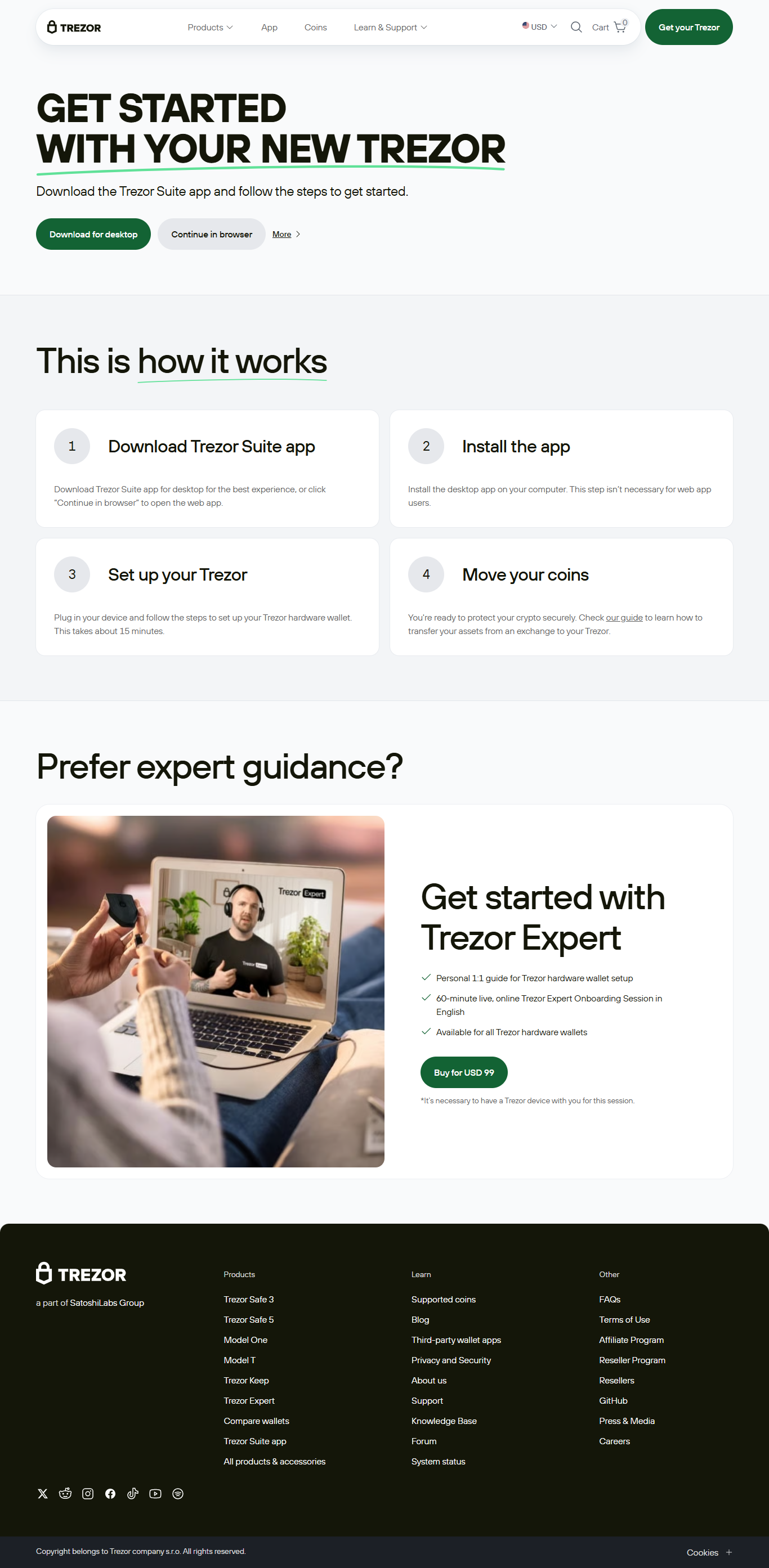
Trezor Start | Secure and Easy Wallet Setup
Cryptocurrency is transforming the way people think about money, investments, and financial autonomy. Owning digital assets offers unprecedented freedom, but it also comes with a unique responsibility: securing your crypto. Unlike traditional banking, where institutions manage your funds, cryptocurrency ownership is entirely self-custodied. Losing access to your private keys or falling victim to online attacks can result in permanent financial loss.
This is where Trezor, one of the most trusted hardware wallet providers, comes in. By combining offline key storage with user-friendly software, Trezor ensures your crypto assets remain secure, accessible, and manageable. This guide, Trezor Start | Secure and Easy Wallet Setup, walks you through the process of setting up your Trezor wallet, protecting your assets, and managing your cryptocurrency portfolio effectively.
What Is Trezor?
Trezor is a hardware wallet, a physical device designed to store your cryptocurrency private keys offline. By keeping keys offline, Trezor protects your assets from malware, phishing attacks, and hacking attempts.
Trezor offers two main models:
Trezor Model One – Affordable, compact, and ideal for beginners.
Trezor Model T – Advanced model with a color touchscreen, expanded memory, and support for a wider range of cryptocurrencies.
Both devices work with Trezor Suite, the official software for managing crypto, enabling users to send and receive assets, monitor balances, exchange currencies, and customize security settings, all while keeping private keys offline.
Why Secure Wallet Setup Matters
Security is the most critical aspect of cryptocurrency ownership. Digital assets are entirely self-custodied, meaning there is no central authority to recover funds in case of loss. Common risks include:
Exchange Hacks: Centralized platforms are vulnerable to cyberattacks.
Phishing Attacks: Fake websites or messages can trick users into revealing sensitive information.
Malware & Keyloggers: Infected devices can compromise passwords or private keys.
Human Error: Losing recovery seeds or sending crypto to incorrect addresses can lead to permanent loss.
Trezor mitigates these risks by storing private keys offline and providing a secure interface through Trezor Suite.
Step 1: Purchase an Official Trezor Device
The first step to secure crypto ownership is acquiring a Trezor wallet. Always purchase directly from Trezor.com or authorized resellers. Avoid third-party marketplaces to prevent receiving tampered or counterfeit devices.
Tips for purchasing safely:
Ensure the package is sealed and includes a USB cable and recovery card.
Verify the device’s authenticity using Trezor Suite during setup.
Choose the model that fits your needs (Model One for simplicity, Model T for advanced features).
Official devices guarantee genuine firmware and prevent potential security compromises.
Step 2: Set Up Your Trezor Wallet
After receiving your Trezor device, follow these steps to set it up securely:
Connect the Device: Plug it into your computer using the included USB cable.
Install Trezor Suite: Download the official software for your operating system from Trezor.com.
Initialize Your Wallet: Trezor Suite will guide you through creating a PIN code.
Generate a Recovery Seed: The device generates a 12–24 word recovery seed. Write it down offline; this is your backup.
Confirm Your Seed: Trezor will ask you to verify the seed to ensure accuracy.
Your recovery seed is crucial—it is the only way to restore your wallet if your device is lost, stolen, or damaged.
Step 3: Protect Your Recovery Seed
The recovery seed is the master key to your cryptocurrency assets. Anyone with access to it can control your funds.
Best practices for securing your seed:
Write it down offline; avoid digital storage.
Keep it in a fireproof and waterproof safe.
Consider a metal backup for enhanced durability.
Never share it with anyone, including support staff.
Treat your recovery seed as your most critical security asset. Its protection ensures your crypto remains safe under any circumstance.
Step 4: Add Accounts in Trezor Suite
Once your device is initialized, you can add cryptocurrency accounts in Trezor Suite:
Open Trezor Suite and connect your hardware wallet.
Navigate to the “Accounts” section and click “Add Account.”
Select the cryptocurrency you want to manage (e.g., Bitcoin, Ethereum, Litecoin).
Synchronize your wallet with Trezor Suite to display balances and transaction history.
You can add multiple accounts for different assets, improving organization and portfolio management.
Step 5: Sending and Receiving Cryptocurrency
Trezor Suite ensures all transactions are secure:
Receiving Crypto: Generate a receiving address within the app and verify it on your device before sharing.
Sending Crypto: Enter the recipient address and amount, then confirm the transaction on the Trezor hardware wallet.
All operations are signed offline, meaning private keys never leave the device.
Step 6: Exchange and Manage Assets
Trezor Suite integrates with trusted third-party services, allowing you to exchange supported cryptocurrencies directly within the app.
Benefits include:
Assets remain in your custody at all times.
Transparent fees and exchange rates.
No need to trust centralized exchanges with private keys.
This feature simplifies portfolio management while maintaining security.
Step 7: Keep Firmware and Software Updated
Regular updates are crucial for security and functionality:
Only update your Trezor device using Trezor Suite.
Verify updates with the software prompts.
Backup your recovery seed before performing firmware updates.
Staying up-to-date ensures protection against new threats and access to the latest features.
Step 8: Advanced Security Options
For enhanced protection, consider the following:
Passphrase Protection: Adds an extra layer of security on top of your recovery seed.
Multiple Accounts: Separate funds across accounts for better organization and reduced risk.
Regular Portfolio Checks: Monitor addresses and transactions to detect anomalies.
These measures enhance both security and usability.
Step 9: Recovering Your Wallet
If your Trezor device is lost, stolen, or damaged, your recovery seed allows you to restore your wallet:
Acquire a new Trezor device.
During setup, select “Recover Wallet.”
Enter your recovery seed accurately.
Your accounts and balances will be restored securely.
Properly storing your recovery seed ensures continuous access to your cryptocurrency under any circumstance.
Step 10: Explore Trezor Suite Features
Trezor Suite provides tools for comprehensive portfolio management:
Portfolio Overview: Track all your assets in one interface.
Multi-Currency Management: Manage dozens of cryptocurrencies and tokens.
Security Notifications: Alerts for firmware updates and potential risks.
Integrated Exchange Options: Swap supported cryptocurrencies safely.
Trezor Suite ensures a seamless, secure, and efficient crypto management experience.
Conclusion
The Trezor Start | Secure and Easy Wallet Setup guide provides a clear roadmap for anyone entering the world of cryptocurrency. By combining a Trezor hardware wallet with Trezor Suite, users gain a secure, user-friendly environment for managing their digital assets.
From purchasing your device and setting up your wallet to safeguarding your recovery seed and managing multiple accounts, Trezor makes securing crypto simple and effective. Whether you are a beginner, a long-term investor, or an active trader, Trezor provides a complete solution to manage, protect, and grow your cryptocurrency portfolio with confidence.
Start your journey today at Trezor.com and experience the security and ease of a hardware wallet combined with Trezor Suite.